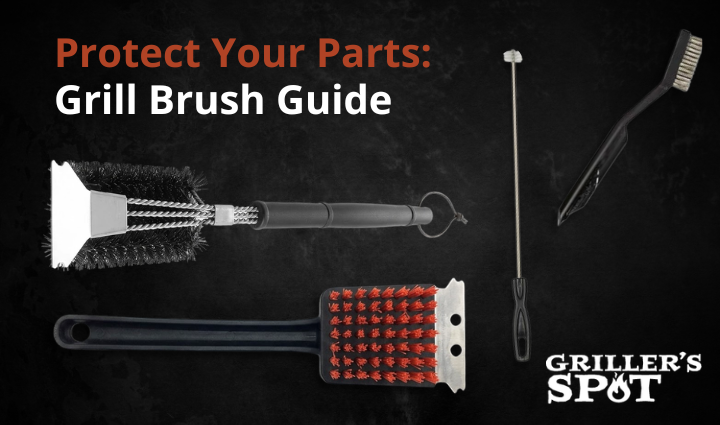
A grill brush is not just a cleanup tool. It is part of your grill maintenance kit. The right brush helps protect cooking grates, keep burner ports clear, reduce flare-up risk, and get more seasons out of the parts you already own.
The wrong tool does the opposite. Aggressive wire bristles can be too harsh for porcelain-coated surfaces. Nylon tools only make sense on a cool grate. And if you never clean the burner tubes underneath, you can end up chasing weak heat, uneven heat zones, or delayed ignition when the real problem is blockage.
This guide is for shoppers who want decision clarity fast. We will break down:
- which tool fits which surface
- where each option makes sense
- and what to double-check before you buy
Let’s dig in.
Quick Answer: Which grill brush should you buy?
Choose your grill brush based on surface and task. Use a bristle-free or scrubber-style tool when you want to avoid loose wire bristles. Use nylon only on a cool grate. Keep a separate burner-cleaning tool on hand for venturi tubes and blocked burner ports; grate brushes do not solve burner airflow problems.
Why brushes matter for grill performance
A clean cooking surface helps with release and searing, but performance goes deeper than that. Grease, carbon, and debris affect airflow, heat transfer, and grease management. When buildup stays on the grates or inside the burners, you can see more sticking, more flare-ups, and less predictable heat across the cook box.
If you are already replacing worn parts like stainless steel grates, porcelain-coated grates, or a stainless steel grate set, the cleaning tool you use should support that investment, not wear it down faster.
How to choose the right brush or scrubber
- Match the tool to the grate material. Stainless grates can usually handle more aggressive cleaning than porcelain-coated surfaces. Cast iron needs cleaning that protects the seasoning rather than stripping it.
- Separate grate cleaning from burner cleaning. A grate brush handles the cooking surface. A venturi tool handles the airflow path inside burners and burner ports.
- Know the temperature limit. Some tools are designed for hot cleaning, while nylon options are cool-surface only.
- Think about reach and control. Long handles help with large cook boxes, but compact scrubbers can give you better pressure on stubborn buildup.
Product type breakdown: brushes vs. scrubbers
Brushes dig into the gaps around grate bars and are usually the better choice for heavier carbon buildup. Scrubbers and pads are better when you want more surface contact and a lower risk of scratching delicate finishes.
- Choose a brush when you need deeper cleaning between grate bars, you are dealing with heavier residue, or you want longer reach across a wider grill.
- Choose a scrubber when you want a lower-profile handheld tool, you prefer a bristle-free approach, or you are maintaining coated surfaces more carefully.
Best grill brush options by job
Best bristle-free option for routine grate cleaning
FoodAid 18-Inch REACH Safe Grill Brush is a strong fit for grill owners who want an aggressive cleaning tool without wire bristles.
- Best for: grill owners who want a bristle-free brush for regular grate cleaning
- Why it works:
- PurePolymer bristles are designed to avoid wire-bristle shedding
- rated for over 250,000 brush strokes and heat resistant up to 650°F
- 5-inch brush head covers more surface area per pass
- Ergonomic 15° handle helps keep more of the brush head in contact with the grate
- Added REACH bristles are designed to clean farther into the back and corner areas
- What to double-check: Confirm the brush shape suits your grate pattern and decide whether you want the standard REACH version or the alternate FoodAid 18-Inch LEVEL Safe Grill Brush.
Best cool-surface nylon option for coated grates
GrillSpot 14-Inch Nylon Bristle Cool-Use Grill Cleaning Brush is the safer play when you want a nylon brush designed for cool-use cleaning.
- Best for: porcelain-coated grates and shoppers who prefer to clean before lighting the grill
- Why it works:
- 2-inch brush head and steel scraper give you two cleaning surfaces in one tool
- Nylon bristles are designed to clean debris off grates without the metal-on-coating contact of a wire brush
- Plastic handle is designed to help protect hands from heat during handling
- Hang hole makes it easy to store with the rest of your maintenance tools.
- What to double-check: use only on a cool grate, and confirm nylon is the right choice for your cleaning routine
Best handheld scrubber for stubborn grate residue
Weber Grill Grate Scrubber is a compact option for shoppers who want pressure and control more than long-handle reach.
- Best for: burnt-on grease and focused spot-cleaning on grill surfaces.
- Heavy-duty design is built specifically for grill cleaning
- Contoured handle gives you a firm, comfortable grip
- Includes 3 replaceable pads, which is useful if you clean often
- What to double-check: make sure a handheld scrubber fits how you clean, especially if you have a large cook box or prefer extra reach
Best long-handle traditional brush for general grate cleaning
Weber 18-Inch Bamboo Grill Brush is a straightforward choice when you want reach, a familiar brush format, and easy wall-hook storage.
- Best for: shoppers who want a long-handle brush for routine grate cleaning.
- Why it works: 18-inch class length helps reach the back of the grill
- Angled bristle head is designed to increase the distance from the heat
- The handle loop makes storage simple
- CSA compliant and includes a 2-year warranty
Best nylon brush for wider grate coverage on a cool surface
DEK 17-Inch Triple Head Nylon Brush is built for shoppers who want broader brush contact while still staying in the cool-cleaning lane.
- Best for: porcelain-coated grates or other surfaces where you prefer cool-use nylon cleaning.
- Why it works: triple-head brushing action is designed to clean faster than a conventional single-head brush
- Long handle improves reach across the cooking area
- Nylon is rated up to 170°F / 77°C, reinforcing that this is a cool-surface tool
- Includes a heavy-duty stainless-steel scraper for stuck-on grease
- What to double-check: use only on a cool surface and confirm the larger head shape fits your grate spacing and access
Best nylon brush for wider grate coverage on a cool surface
DEK 17-Inch Triple Head Nylon Brush is built for shoppers who want broader brush contact while still staying in the cool-cleaning lane.
- Best for: porcelain-coated grates or other surfaces where you prefer cool-use nylon cleaning.
- Why it works: triple-head brushing action is designed to clean faster than a conventional single-head brush
- Long handle improves reach across the cooking area
- Nylon is rated up to 170°F / 77°C, reinforcing that this is a cool-surface tool
- Includes a heavy-duty stainless-steel scraper for stuck-on grease
- What to double-check: use only on a cool surface and confirm the larger head shape fits your grate spacing and access
Best burner-cleaning tool for airflow and ignition issues
The Flexible BBQ Venturi Brush and Wire Burner Brush Cleaning Kit is the tool in this guide that solves a different problem: blocked burner tubes and clogged burner ports.
- Best for: grills with weak heat, uneven flames, delayed ignition, or known burner blockage.
- Why it works: the flexible coil-spring venturi brush is designed to clean inside the burner tube
- The outer bristle brush helps clean debris off the outside of the burner
- Slide-out port hole cleaner helps clear blocked burner ports
- Keeping burner venturis clean can support safer gas flow and more even burner performance
- What to double-check: match the brush length and flexibility to your burner layout, and inspect burner condition while you clean
Compatibility guidance: match the tool to the surface
This is where most buying mistakes happen. A brush can be well-made and still be wrong for your grill.
- Stainless steel grates: You usually have the most flexibility here. Bristle-free options, traditional brushes, and scrubbers can all make sense depending on your cleaning style.
- Cast iron grates: Avoid overly aggressive cleaning that strips seasoning. Clean with control, then re-oil as needed to protect the surface.
- Porcelain-coated grates: Lean toward gentler tools and cool-use nylon options. The coating is there for a reason, and once it chips, the grate starts losing ground.
- Burners and venturi tubes: Use a purpose-built burner brush kit, not your grate brush.
If you are unsure what surface you have, check the part description before buying. These linked examples show the difference between stainless steel and porcelain-enameled grates.
Quick buyer checklist
- Do you need hot-surface cleaning or cool-surface cleaning?
- Are your grates stainless, cast iron, or porcelain-coated?
- Do you want to avoid wire bristles entirely?
- Do you need long reach or more scrubbing pressure?
- Are you buying for grate cleaning only, or also for burner maintenance?
Price tiers: what changes as you move up
At the budget end, expect basic cleaning capability and fewer specialty features. In the middle, you start to see better ergonomics, replaceable components, and more deliberate surface-specific designs. Toward the premium end, the value is usually in durability, specialty materials, or a design that solves a specific problem better, not in flashy extras.
A good rule: spend based on the part you are protecting. If you are maintaining expensive coated grates or chasing burner performance problems, the right specialized tool is cheaper than replacing damaged components later.
Maintenance and replacement timing
A worn cleaning tool can scratch surfaces, leave debris behind, or just make every cleanup harder than it should be.
- Replace any traditional brush that is shedding, bent, rusting, or loosening at the head.
- Wash off grease and carbon after heavy use, then let the tool dry fully before storage.
- Store brushes in a dry spot so handles, pads, and bristles last longer.
For burner care, add venturi cleaning to your spring service and fall maintenance routine.
Burner troubleshooting shortcut
If the grill is heating unevenly, do not assume the burners need replacement right away. First inspect for blocked venturis, blocked burner ports, grease buildup, and debris. That is exactly where a burner cleaning kit earns its keep.
For a closer look at insect blockage inside burners, see this burner maintenance article.
FAQ
What is the safest type of grill brush?
That depends on what you are trying to avoid. If your main concern is loose wire bristles, a bristle-free option such as the FoodAid REACH Safe Grill Brush is the more direct answer.
Can I use a nylon grill brush on a hot grill?
Not unless the product is rated for that use. The nylon options in this guide are specifically cool-use tools, and they should be used on a cool surface.
Do I need a separate brush for burners?
Yes. Burner tubes and venturis need a different tool shape and a different cleaning job than cooking grates do.
What should I use on porcelain-coated grates?
Use a gentler approach and avoid anything that can chip the coating. Cool-use nylon tools or a scrubber-style cleaner are usually the safer direction.
How often should I replace a grill brush?
Replace it when it stops cleaning effectively, starts shedding, shows rust, or feels loose or damaged. A brush that is past its prime can do more harm than good.
Best for you: final recommendation
Buy based on the actual job.
- Choose FoodAid 18-Inch REACH Safe Grill Brush if you want a durable, bristle-free brush for routine grate cleaning.
- Choose GrillSpot 14-Inch Nylon Bristle Cool-Use Grill Cleaning Brush or DEK 17-Inch Triple Head Nylon Brush if you want a cool-surface nylon option for coated grates.
- Choose the Weber Grill Grate Scrubber if you want a compact handheld scrubber.
- Choose the Weber 18-Inch Bamboo Grill Brush if you want long reach and a traditional brush format.
- Choose the Flexible BBQ Venturi Brush and Wire Burner Brush Cleaning Kit if burner airflow, ignition, or blocked ports are part of the problem.
To shop for more maintenance options, browse grill cleaning tools.